Grinding chicken bones in a meat grinder for home use is achievable with the right heavy-duty electric meat grinder, proper bone preparation, and strict adherence to safety protocols. A grinder with a minimum of 1000 watts, stainless steel blades, and a reverse function is recommended for safely processing raw, soft poultry bones like chicken necks and backs, which provide essential nutrients for pets.
Understanding Meat Grinders and Bone Grinding
A meat grinder is a kitchen appliance designed to finely chop or mince meat, creating a consistent texture ideal for sausages, burgers, and other culinary delights. While traditionally used for muscle meat, modern heavy-duty electric grinders have expanded their capabilities to include softer bones. The primary reason many individuals choose to grind chicken bones is to create homemade pet food, aligning with raw feeding diets like BARF (Biologically Appropriate Raw Food), which emphasize the nutritional benefits of raw bones, cartilage, and organs for pets. Ground bones are a fantastic source of essential nutrients like calcium, phosphorus, and collagen, contributing to stronger bones, healthier teeth, and improved overall vitality in animals. Beyond pet food, incorporating ground bones can also contribute to waste reduction, making better use of the entire animal and supporting sustainable practices.
However, it’s crucial to understand that not all meat grinders are designed to handle bones. Attempting to grind bones with an inadequate machine can lead to damaged blades, a strained motor, and potential safety risks. Specialized heavy-duty electric models with powerful motors and reinforced components are necessary for this task, as manual grinders and basic electric models are typically unsuitable.
Choosing the Right Meat Grinder for Chicken Bones
Selecting the appropriate meat grinder is the most critical step when planning to process chicken bones. The wrong choice can lead to frustration, damage to your appliance, and even injury.
Power and Motor
When grinding bones, power is paramount. A meat grinder needs a robust motor to withstand the resistance of grinding bone material without overheating or stalling. Experts generally recommend a meat grinder with a minimum of 1000 watts for bone grinding tasks. This ensures the motor is strong enough to process tougher materials like chicken bones efficiently. Look for models explicitly advertised as “heavy-duty” or “bone-grinding capable.” Several brands have earned reputations for producing grinders suitable for this purpose, including specific models from LEM, STX, and VEVOR, which are designed with powerful motors and durable components. [cite: 2, 3, 4 (search result 1 and 2 for “best meat grinder for chicken bones”)]
Blades and Plates
|
Our Picks for the Best Meat Grinder in 2026
As an Amazon Associate I earn from qualifying purchases.
|
||
| Num | Product | Action |
|---|---|---|
| 1 | Weston Electric Meat Grinder & Sausage Stuffer, #12 750 Watt, 1 HP Motor, Grinds 4 lbs Per Minute, Includes Stainless Steel Grinding Plates, Die-Cast Aluminum (33-1301-W) |

|
| 2 | AAOBOSI Multifunctional Digital Meat Grinder Electric 3000W Max w/ 9 Touch Screen Presets, Auto-Reverse & Built-in Storage -Grinding, Sausage & Kibbe & Grate Cheese Making for Home Use |
|
| 3 | AAOBOSI #12 Meat Grinder, [3000W] 3 Speed Meat Grinder Heavy Duty: Built-in Storage Box, 2 Blades,4 Plates,3 Sausage Stuffers,Kibbe Kit,Meat Claw & Burger Press, for Home & Kitchen Use |
|
| 4 | Meat Grinder, Electric Meat Grinder with Sausage Stuffer Maker & Kubbe Kit, Metal-Body Meat Mincer with 3 Stainless Steel Grinding Plates & 2 Blades for Home Kitchen Using |
|
| 5 | Camic Electric Meat Grinder - 300W Sausage Stuffer for Home Kitchen Use Meat Mincer with Stainless Steel 3 Plates, 1 Blade, Sausage Tube, Kubbe Maker |
|
| 6 | CHEFFANO Meat Grinder, 2600W Max Stainless Steel Meat Grinder Electric, ETL Approved Heavy Duty Meat Mincer Machine with 2 Blades, 3 Plates, Sausage Stuffer Tube & Kubbe Kit for Home Kitchen Use |
|
| 7 | VEVOR Commercial Electric Meat Grinder, 5 lbs/min Capacity, #8 Industrial Meat Mincer with 2 Stainless Steel Blades, 2 Grinding Plates, 600W Heavy-Duty Sausage Maker Stuffer, for Kitchen, Restaurant |
|
| 8 | AAOBOSI Meat Grinder Electric 3000W Max with Touch Color Screen, Auto-Reverse & Built-in Storage - 3 Speed Settings,Grinding, Sausage & Kibbe Making for Home Use, Stainless Steel |
|
| 9 | Cuisinart Electric Meat Grinder, Stainless Steel |
|
| 10 | Electric Meat Grinder, Sausage Stuffer with 3 Sausage Tubes, 2 Blades, 3 Plates, 3200W Max, Meat Grinder Heavy Duty for Home Kitchen Use, Stainless Steel (Black) |
|
The cutting components of your meat grinder are equally important. For bone grinding, stainless steel blades are a non-negotiable feature. They offer superior strength, durability, and resistance to rust, which is vital when coming into contact with bone fragments. Dull or low-quality blades will struggle, potentially damaging the machine and producing inconsistent results. When selecting grinding plates, it is often recommended to use a plate with larger holes for the initial grind. This helps prevent clogging and reduces strain on the motor as the bones are first broken down. For a finer grind, you can re-process the bones using a smaller plate after the first pass.
Features to Look For
Beyond raw power and material quality, certain features enhance the safety and efficiency of bone grinding:
- Reverse Function: An invaluable feature that allows the auger to spin backward, helping to clear any bones or meat that get jammed in the grinding mechanism without requiring full disassembly. [cite: 2 (search result 2 for “best meat grinder for chicken bones”)]
- Durability and Build Quality: Grinding bones places significant stress on the machine. Opt for grinders with robust housing, gears, and internal components designed for heavy use.
- Manufacturer’s Bone-Grinding Approval: Always check the product specifications or manufacturer’s guidelines to confirm that the specific model is approved for grinding bones. Some warranties might be voided if the grinder is used for purposes it’s not designed for. For instance, certain LEM models explicitly state their capability for raw chicken bones.
Preparing Chicken Bones for Grinding
Proper preparation of chicken bones is crucial for both safety and the longevity of your meat grinder. Overlooking these steps can lead to jams, damage, and poor results.
Selecting the Right Bones
The type of bones you choose significantly impacts the success of your grinding process. For home meat grinders, stick to raw, soft poultry bones. This includes chicken, duck, and turkey bones, as well as bones from other small animals like rabbits and fish. These bones are less dense and more brittle, making them easier for a heavy-duty grinder to process.
Crucially, never attempt to grind cooked bones. Cooked bones become brittle and can splinter into sharp, dangerous fragments that pose a choking hazard to pets and can damage your grinder. Also, avoid grinding large, dense bones from animals like cows, pigs, or lambs. These require industrial-grade bone grinders, and attempting to process them in a home meat grinder will almost certainly lead to damage.
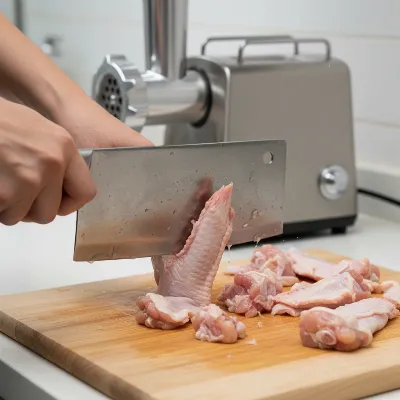 A person cutting raw chicken bones into small pieces on a wooden board next to a meat grinder.
Pre-Grinding Preparation
Once you’ve selected suitable raw bones, a few steps are necessary before they go into the grinder:
- Cleaning and Trimming Excess: While leaving some meat on smaller chicken pieces (like wings or necks) is acceptable, especially for pet food, it’s a good practice to trim off any excessive fat or skin. This can help prevent clogging and make for a cleaner grind.
- Cutting Bones into Manageable Pieces: This is perhaps the most important preparation step. Bones should be cut into pieces that are no longer than 2-3 inches (5.1–7.6 cm) or no thicker than your thumb. This ensures they fit easily into the grinder’s feeding chute and reduces the strain on the motor and blades. Use a sturdy cleaver or heavy-duty kitchen shears for this task.
- Chilling Bones for Optimal Grinding: For the best results, ensure your chicken bones are as cold as possible without being fully frozen. Chilling helps the bones retain their structure and prevents them from becoming too pliable, which can make grinding more difficult. Partially frozen bones can also be easier to grind, but fully frozen bones may be too hard for some home grinders.
Step-by-Step Guide to Grinding Chicken Bones Safely
Grinding chicken bones can be done safely and efficiently by following a systematic approach and prioritizing user safety.
Setting Up Your Grinder
Before you begin, ensure your workspace and equipment are ready:
- Stable Surface: Place your meat grinder on a stable, non-slip surface, such as a sturdy countertop. This prevents the machine from moving or tipping during operation, which can be dangerous.
- Proper Assembly: Assemble your meat grinder according to the manufacturer’s instructions. Double-check that all components, including the blade, grinding plate (start with a coarser one for bones), and auger, are correctly fitted and secured. Position a clean bowl or container under the output to collect the ground bones.
- Protective Gear: Always wear protective gear, including sturdy gloves and safety glasses or eye protection, to shield yourself from potential bone fragments or kickbacks.
The Grinding Process
Once your setup is complete, you can begin grinding:
- Feed Bones Slowly, One at a Time: This is critical to prevent jamming and straining the motor. Turn on the grinder, then drop one prepared bone piece into the feeding tube. Use the designated pusher tool to guide it down.
- Wait for Clearance: Allow each bone piece to pass completely through the grinder before adding the next. Feeding bones too quickly can cause clogs and potentially damage the machine.
- Managing Jams with the Reverse Function: If the grinder jams, immediately turn off the machine. If your grinder has a reverse function, activate it to try and clear the obstruction. If it doesn’t clear, you will need to carefully disassemble the grinding head to remove the blockage.
- Multiple Grinds for Finer Results: For an extra-fine texture, particularly for very young pets or specific recipes, you can put the already ground bones through the grinder a second time, often with a finer grinding plate. For the first grind, a stuffing plate is often recommended, and for a second grind, a 10mm plate can be used.
Essential Safety Precautions
Safety should always be your top priority when operating a meat grinder, especially when dealing with bones.
- Keep Hands Clear: Never use your hands to push bones into the grinder’s feeding tube. Always use the provided pusher tool. Keep loose clothing, jewelry, and long hair away from the rotating parts.
- Follow Manufacturer Instructions: Adhere strictly to your meat grinder’s operating manual. Manufacturers provide specific guidelines for safe usage and limitations of their machines.
- Supervision: Never leave the grinder running unattended. Stay focused on the task and be prepared to turn off the machine immediately if any issues arise.
Maintaining Your Meat Grinder After Bone Grinding
Grinding bones can exert more wear and tear on your meat grinder compared to just processing meat. Proper cleaning and regular maintenance are essential to prolong the lifespan of your appliance and ensure it remains safe and hygienic.
Immediate Cleaning
After each bone grinding session, thorough cleaning is imperative:
- Disassembly and Cleaning: Immediately disassemble the grinder according to the manufacturer’s instructions. Clean all components—including the housing, feeding tray, auger, blades, and plates—with warm, soapy water. Bone particles can quickly build up and harden, becoming difficult to remove if left to dry.
- Preventing Residue Buildup and Corrosion: Ensure all parts are meticulously cleaned to prevent bacterial growth and corrosion, especially since stainless steel can still be prone to staining or pitting if acidic residues are left on it. Rinse thoroughly and dry all parts completely before reassembling or storing.
 Meat grinder parts disassembled and drying after cleaning, with a cleaning brush.
Regular Maintenance
Beyond immediate cleaning, consistent maintenance will help your grinder endure the demands of bone processing:
- Sharpening/Replacing Blades and Plates: Bones dull blades significantly faster than meat. Regularly inspect your blades and plates for signs of dullness or damage. Sharpening blades or replacing dull ones will ensure efficient grinding and reduce motor strain. Consumable parts like bushings, knives, and plates may need more frequent replacement when grinding bones.
- Lubrication: According to your grinder’s manual, lubricate any moving parts to ensure smooth operation and prevent premature wear.
- Awareness of Wear and Tear: Be mindful that even with the best care, grinding bones may shorten the overall lifespan of certain consumable parts of your grinder. Factor this into your maintenance routine and be prepared for potential replacements.
Buying Guide: Key Considerations for a Bone-Grinding Meat Grinder
When investing in a meat grinder specifically for chicken bones, keep these critical factors in mind to make an informed decision:
- Power (Wattage): Prioritize grinders with a robust motor, ideally 1000 watts or higher, to handle the density of bones.
- Materials: Opt for stainless steel components, particularly for the blades, plates, and auger, for durability and hygiene.
- Brand Reputation: Research brands known for producing heavy-duty, reliable grinders that explicitly state their capability for bone grinding (e.g., specific models from LEM, STX, VEVOR).
- Features: A reverse function is highly beneficial for clearing jams, and an air-cooling system can help prevent motor overheating during prolonged use.
- Budget vs. Quality: While cheaper models exist, a higher initial investment in a quality, powerful grinder will likely save you money and frustration in the long run due due to increased durability and performance.
- Warranty and Customer Support: Check the manufacturer’s warranty regarding bone grinding. Some reputable brands offer warranties that cover this specific use. Good customer support can be invaluable for parts and troubleshooting.
> “Investing in a high-quality meat grinder with sufficient power and durable blades is key to effectively grinding bones for pet food or other purposes.” – ReviewsSure.com Admin, Meat Grinder Technician with 10+ years of experience
Conclusion
Grinding chicken bones in a meat grinder is a practical skill for pet owners and those seeking to reduce food waste, but it demands the right equipment and adherence to safety protocols. By choosing a heavy-duty electric meat grinder with adequate power, robust stainless steel components, and essential features like a reverse function, you set yourself up for success. Proper preparation of raw, soft poultry bones, cautious operation by feeding bones slowly and using a pusher tool, and diligent post-grind cleaning and maintenance are non-negotiable steps. Prioritizing safety through protective gear and following manufacturer guidelines will ensure a smooth and safe process.
Are you ready to elevate your home food preparation by incorporating nutrient-rich ground chicken bones? The journey to safe and effective bone grinding begins with understanding your equipment and committing to best practices.
Frequently Asked Questions
Can I use a KitchenAid grinder attachment for chicken bones?
Generally, KitchenAid grinder attachments are not recommended for grinding bones. Their motors and internal gears are typically not strong enough to handle bone material, and doing so can damage the attachment or the mixer itself, potentially voiding the warranty. For grinding bones, a dedicated heavy-duty electric meat grinder is a safer and more effective choice.
What kind of chicken bones are best for grinding?
Raw, soft chicken bones such as wing tips, necks, backs, and rib cages are ideal for grinding. These bones are less dense and more pliable, making them easier for a heavy-duty meat grinder to process. Always avoid cooked bones, as they splinter and can be dangerous.
How do I prevent my meat grinder from jamming when grinding bones?
To prevent jamming, cut bones into small, manageable pieces (2-3 inches). Feed them slowly into the grinder, one piece at a time, using the pusher tool and waiting for each piece to clear before adding the next. Using a coarse grinding plate for the first pass can also help. A grinder with a reverse function is beneficial for clearing minor jams.
Frequently Asked Questions
What type of meat grinder is best for grinding chicken bones?
The best meat grinder for chicken bones is a heavy-duty electric model with a minimum of 1000 watts of power. It should feature durable stainless steel blades and plates, and ideally include a reverse function to clear jams. Brands like LEM, STX, and VEVOR offer models suitable for this task.
Can I use a KitchenAid grinder attachment for chicken bones?
No, KitchenAid grinder attachments are generally not recommended for grinding bones. Their motors and internal gears are typically not robust enough to handle bone material, which can lead to damage to the attachment or the mixer itself, potentially voiding the warranty. A dedicated heavy-duty electric meat grinder is a safer and more effective choice for bones.
What kind of chicken bones are best for grinding?
Raw, soft poultry bones are best for grinding, including chicken wing tips, necks, backs, and rib cages. These bones are less dense and more pliable, making them easier for a heavy-duty meat grinder to process. Never attempt to grind cooked bones, as they become brittle and can splinter into dangerous fragments.
How do I prevent my meat grinder from jamming when grinding bones?
To prevent jamming, cut bones into small, manageable pieces, no longer than 2-3 inches (5.1u20137.6 cm). Feed them slowly into the grinder, one piece at a time, using the provided pusher tool. Allow each piece to clear completely before adding the next. Using a coarse grinding plate for the initial pass and a grinder with a reverse function can also help.
What are the essential safety precautions when grinding chicken bones?
Essential safety precautions include always using the provided pusher tool to feed bones, never your hands. Wear sturdy gloves and safety glasses to protect against bone fragments. Always follow the manufacturer's instructions for your specific grinder model, and never leave the machine running unattended.
How to Safely Grind Chicken Bones in a Meat Grinder
This guide outlines the steps to safely and efficiently grind raw chicken bones using a heavy-duty meat grinder for purposes like homemade pet food.
Place your meat grinder on a stable, non-slip surface and assemble it according to the manufacturer's instructions, ensuring all components are correctly fitted. Position a clean bowl to collect the ground bones. Always wear protective gear, including sturdy gloves and safety glasses, to prevent injury from bone fragments.
Select raw, soft poultry bones like necks, backs, or wing tips; never use cooked bones. Trim off any excessive fat or skin. Cut the bones into small, manageable pieces, no longer than 2-3 inches (5.1u20137.6 cm), using a cleaver or heavy-duty kitchen shears. Chill the bones thoroughly to maintain their structure, but avoid fully frozen bones.
Turn on the grinder and feed bones slowly, one piece at a time, into the feeding tube using only the designated pusher tool. Allow each bone piece to pass completely through before adding the next to prevent jamming. If a jam occurs, immediately turn off the machine and use the reverse function if available, or carefully disassemble to clear the obstruction.
Immediately after grinding, disassemble all grinder components and wash them thoroughly with warm, soapy water to prevent residue buildup and bacterial growth. Rinse and dry all parts completely before reassembling or storing. Regularly inspect and sharpen or replace blades and plates, as bones dull them faster than meat, to ensure efficient operation and prolong the grinder's lifespan.

I got one of the recommended grinders, and while it does a decent job with chicken bones, I found the stainless steel blades dulled a bit faster than I expected. It still works, but I have to be more careful about how I feed the bones in. For the price, I was hoping for a little more durability in the blades themselves. Good for soft bones, though.
I’ve been wanting to make my own raw pet food for ages, and this guide on grinding chicken bones was a game-changer. My old grinder just couldn’t handle anything but muscle meat, but after reading about the 1000-watt minimum, I upgraded. Now I’m easily processing chicken necks and backs for my dogs, and they absolutely love it. So much healthier than store-bought!
This was super helpful for understanding what to look for in a grinder for bones. I was a bit hesitant about the safety protocols, but the tips on bone preparation made me feel much more confident. My new grinder with the reverse function has been a lifesaver when I’ve had a tougher piece of bone. Definitely recommend for anyone looking to make BARF diets at home.
Finally, a way to make truly nutritious pet food! I was always worried about grinding bones, but knowing that raw, soft poultry bones are the key made all the difference. My cats are thriving on the homemade food I’m making with ground chicken bones. The consistent texture is perfect for them, and I feel good knowing exactly what’s in their meals.