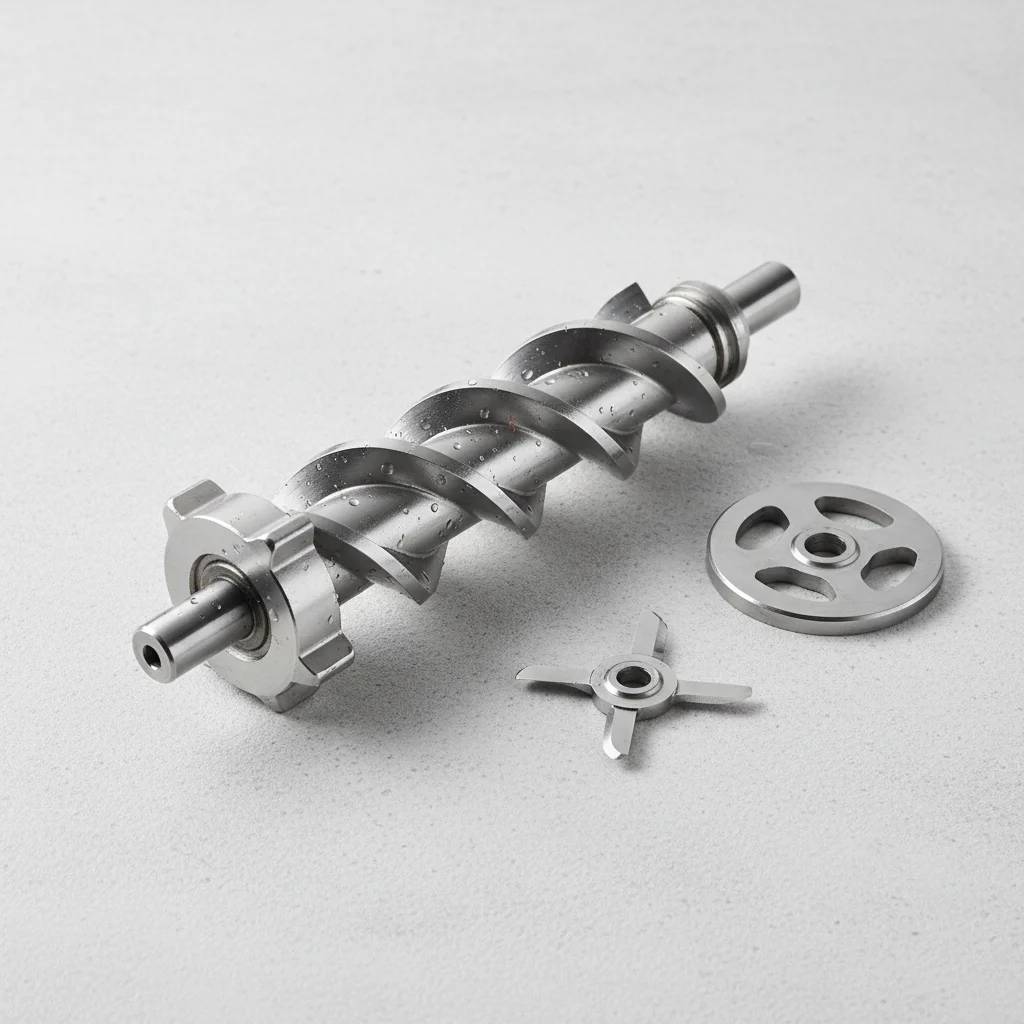
The meat grinder auger, also known as a worm or feed screw, is the crucial component responsible for pushing meat through the grinder’s body towards the cutting blade and plate. It operates on a helical principle, continuously drawing raw meat from the hopper and compressing it as it moves forward, ensuring a steady and efficient grinding process. Without a properly functioning auger, the meat grinder cannot effectively process ingredients.
Understanding the Auger’s Design and Function
The auger’s design is fundamental to its function. It typically features a spiral or helical shape that fits snugly within the grinder’s housing. As the motor rotates the auger, the continuous screw-like motion grabs the meat and forces it along the barrel. This action not only moves the meat but also applies pressure, which is essential for a clean cut when the meat reaches the blade and plate. The pitch and diameter of the auger’s helix can vary between models, influencing the speed and efficiency of the grinding. For complete meat grinder library on this site.
Common Materials and Durability
Meat grinder augers are commonly made from durable materials such as stainless steel, cast iron, or hardened plastic. Stainless steel augers are highly prized for their corrosion resistance and longevity, making them ideal for frequent use and easy cleaning. Cast iron augers, while robust, require careful seasoning and maintenance to prevent rust. Plastic augers are often found in lighter-duty or entry-level models and are suitable for occasional home use with softer meats. The choice of material directly impacts the auger’s durability and suitability for different types of meat and grinding tasks.
Impact of Auger Speed on Grinding Quality
|
Our Picks for the Best Meat Grinder in 2026
As an Amazon Associate I earn from qualifying purchases.
|
||
| Num | Product | Action |
|---|---|---|
| 1 | Electric Meat Grinder, Sausage Stuffer with 3 Sausage Tubes, 2 Blades, 3 Plates, 3200W Max, Meat Grinder Heavy Duty for Home Kitchen Use, Stainless Steel (Black) |

|
| 2 | AAOBOSI Multifunctional Digital Meat Grinder Electric 3000W Max w/ 9 Touch Screen Presets, Auto-Reverse & Built-in Storage -Grinding, Sausage & Kibbe & Grate Cheese Making for Home Use |
|
| 3 | Meat Grinder, Electric Meat Grinder with Sausage Stuffer Maker & Kubbe Kit, Metal-Body Meat Mincer with 3 Stainless Steel Grinding Plates & 2 Blades for Home Kitchen Using |
|
| 4 | CHEFFANO Meat Grinder, 2600W Max Stainless Steel Meat Grinder Electric, ETL Approved Heavy Duty Meat Mincer Machine with 2 Blades, 3 Plates, Sausage Stuffer Tube & Kubbe Kit for Home Kitchen Use |
|
| 5 | AAOBOSI #12 Meat Grinder, [3000W] 3 Speed Meat Grinder Heavy Duty: Built-in Storage Box, 2 Blades,4 Plates,3 Sausage Stuffers,Kibbe Kit,Meat Claw & Burger Press, for Home & Kitchen Use |
|
| 6 | Cuisinart Electric Meat Grinder, Stainless Steel |
|
| 7 | AAOBOSI Meat Grinder Electric 3000W Max with Touch Color Screen, Auto-Reverse & Built-in Storage - 3 Speed Settings,Grinding, Sausage & Kibbe Making for Home Use, Stainless Steel |
|
| 8 | VEVOR Commercial Electric Meat Grinder, 5 lbs/min Capacity, #8 Industrial Meat Mincer with 2 Stainless Steel Blades, 2 Grinding Plates, 600W Heavy-Duty Sausage Maker Stuffer, for Kitchen, Restaurant |
|
| 9 | Camic Electric Meat Grinder - 300W Sausage Stuffer for Home Kitchen Use Meat Mincer with Stainless Steel 3 Plates, 1 Blade, Sausage Tube, Kubbe Maker |
|
| 10 | Weston Electric Meat Grinder & Sausage Stuffer, #12 750 Watt, 1 HP Motor, Grinds 4 lbs Per Minute, Includes Stainless Steel Grinding Plates, Die-Cast Aluminum (33-1301-W) |
|
The speed at which the auger rotates significantly impacts the quality of the grind. A slower auger speed generally results in a more consistent and cooler grind, which is beneficial for maintaining the texture and integrity of the meat, especially when making sausages or ground beef. Conversely, a very high auger speed can generate more friction and heat, potentially smearing the meat and affecting its texture. Many modern meat grinders offer variable speed settings, allowing users to optimize the auger’s rotation for different types of meat and desired outcomes.
Maintaining Your Meat Grinder Auger
Proper maintenance of your meat grinder auger is essential for its longevity and the overall performance of your grinder. After each use, the auger should be thoroughly cleaned to remove all meat residues. Disassemble the auger from the grinder body and wash it with warm, soapy water. For cast iron augers, ensure it is completely dried and lightly oiled to prevent rust. Regular inspection for wear and tear, such as nicks or bends, can help identify issues before they impact grinding performance. A well-maintained auger ensures efficient operation and extends the life of your meat grinder.
- Always clean the auger immediately after use to prevent food buildup.
- Inspect the auger for any signs of damage or wear before each grinding session.
- Lubricate cast iron augers with food-grade mineral oil to prevent rust.
- Store the auger in a dry place to avoid moisture exposure.
- Ensure the auger is correctly reassembled to prevent operational issues.
Troubleshooting Common Auger Problems
If your meat grinder isn’t feeding meat properly, the auger is often the culprit. Common issues include meat getting stuck around the auger, the auger not rotating, or the auger becoming dull. If meat is getting stuck, ensure you are not overfilling the hopper and that the meat is cut into appropriate sizes. If the auger isn’t rotating, check for obstructions or motor issues. A dull auger, while less common than a dull blade, can also affect performance and may require replacement.For persistent issues, consulting your grinder’s manual or a professional repair service is recommended. Understanding how your auger works and how to maintain it will ensure smooth operation for years to come.

Good info, but I wish there was more detail on how to clean the auger properly. Mine sometimes gets a bit gunked up, especially after grinding fattier cuts for burgers. I get that it’s crucial for pushing the meat, but maintenance tips for that specific part would have been a nice addition. Still, it’s good to know why it’s so important.
I’ve been making my own ground beef for tacos and chili, and the consistency is always perfect. I never really thought about the ‘feed screw’ before, but knowing it’s responsible for drawing the raw meat from the hopper and applying pressure explains a lot. It’s a small but mighty component that makes all the difference in my kitchen.
I always wondered how my grinder worked so efficiently, and this really cleared it up. The explanation of the helical principle makes perfect sense. I’ve been using my grinder for years to make homemade sausages, and the consistent feed from the auger is definitely key to getting that smooth texture. Great to understand the mechanics behind it!
This was super helpful! I recently upgraded to a more powerful grinder, and I noticed how much faster it processes meat. Now I understand it’s all about that auger design and how it compresses the meat before it hits the blade. My old one must have had a less efficient worm screw because it always felt like it was struggling a bit more.