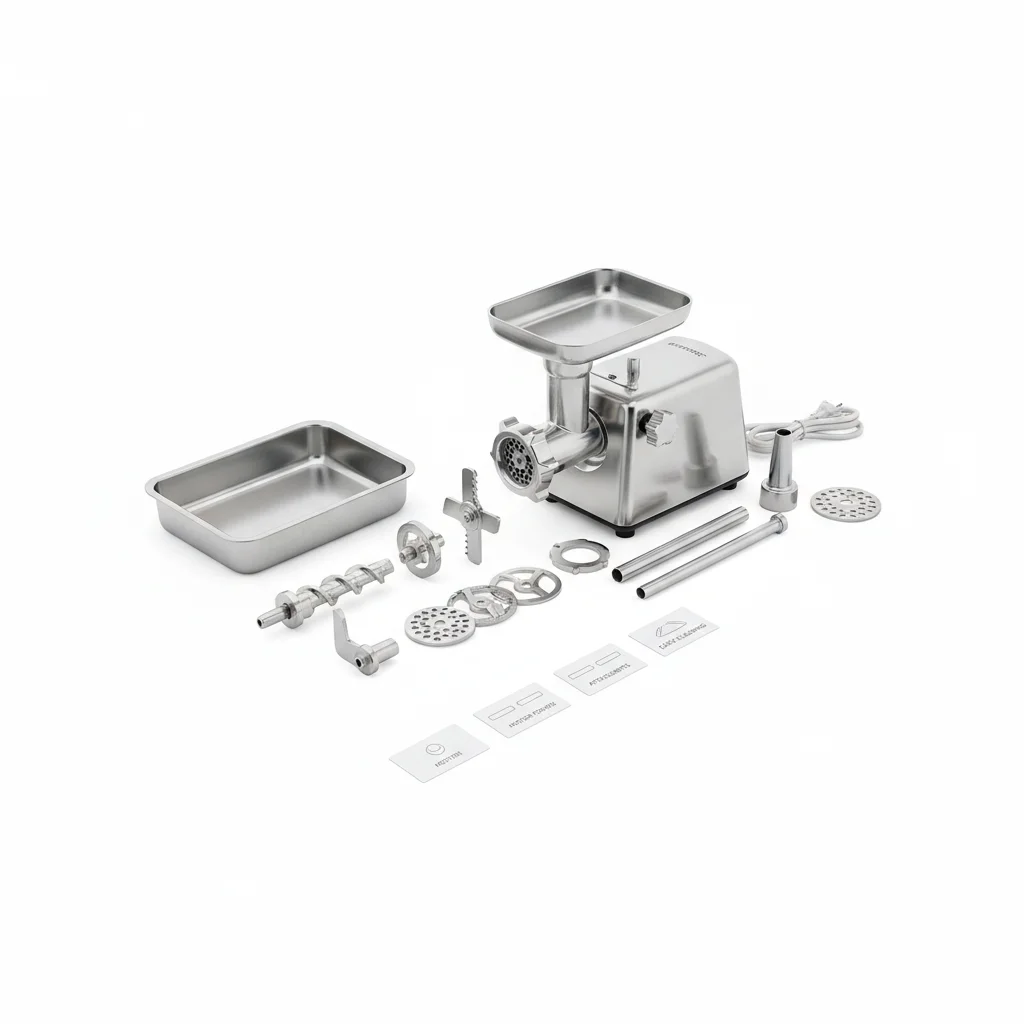
When investing in a meat grinder, understanding the key features that truly matter can make all the difference in your grinding experience. There are five crucial features to prioritize: motor power, material construction, plate and blade quality, ease of cleaning, and included accessories. Focusing on these aspects will ensure you select a grinder that meets your specific needs for efficiency, durability, and versatility.
Motor Power and Performance
The motor is the heart of any meat grinder, directly impacting its performance and ability to handle various types of meat. For home use, a motor between 500W and 1000W is generally sufficient for occasional grinding of softer meats. However, if you plan to process tougher cuts, larger quantities, or even soft bones for pet food, look for models with 1000W or more. Commercial-grade grinders can exceed 1500W, offering continuous operation without overheating. Consider the wattage in conjunction with the grinder’s gear system, as some models optimize power delivery more efficiently than others.
Material Construction and Durability
The materials used in a meat grinder’s construction dictate its longevity and hygiene. Stainless steel is the gold standard for its durability, rust resistance, and ease of sanitation. Avoid models with too many plastic components, especially in critical areas like the auger housing or grinding head, as these can wear down quickly or harbor bacteria. Die-cast aluminum is a common alternative, offering a good balance of strength and weight, but it’s not as corrosion-resistant as stainless steel. Always check if the internal gears are metal, as plastic gears are a common point of failure in cheaper models.
Plates, Blades, and Versatility
|
Our Picks for the Best Meat Grinder in 2026
As an Amazon Associate I earn from qualifying purchases.
|
||
| Num | Product | Action |
|---|---|---|
| 1 | Weston Electric Meat Grinder & Sausage Stuffer, #12 750 Watt, 1 HP Motor, Grinds 4 lbs Per Minute, Includes Stainless Steel Grinding Plates, Die-Cast Aluminum (33-1301-W) |

|
| 2 | AAOBOSI #12 Meat Grinder, [3000W] 3 Speed Meat Grinder Heavy Duty: Built-in Storage Box, 2 Blades,4 Plates,3 Sausage Stuffers,Kibbe Kit,Meat Claw & Burger Press, for Home & Kitchen Use |
|
| 3 | Meat Grinder, Electric Meat Grinder with Sausage Stuffer Maker & Kubbe Kit, Metal-Body Meat Mincer with 3 Stainless Steel Grinding Plates & 2 Blades for Home Kitchen Using |
|
| 4 | VEVOR Commercial Electric Meat Grinder, 5 lbs/min Capacity, #8 Industrial Meat Mincer with 2 Stainless Steel Blades, 2 Grinding Plates, 600W Heavy-Duty Sausage Maker Stuffer, for Kitchen, Restaurant |
|
| 5 | Cuisinart Electric Meat Grinder, Stainless Steel |
|
| 6 | AAOBOSI Meat Grinder Electric 3000W Max with Touch Color Screen, Auto-Reverse & Built-in Storage - 3 Speed Settings,Grinding, Sausage & Kibbe Making for Home Use, Stainless Steel |
|
| 7 | Electric Meat Grinder, Sausage Stuffer with 3 Sausage Tubes, 2 Blades, 3 Plates, 3200W Max, Meat Grinder Heavy Duty for Home Kitchen Use, Stainless Steel (Black) |
|
| 8 | CHEFFANO Meat Grinder, 2600W Max Stainless Steel Meat Grinder Electric, ETL Approved Heavy Duty Meat Mincer Machine with 2 Blades, 3 Plates, Sausage Stuffer Tube & Kubbe Kit for Home Kitchen Use |
|
| 9 | AAOBOSI Multifunctional Digital Meat Grinder Electric 3000W Max w/ 9 Touch Screen Presets, Auto-Reverse & Built-in Storage -Grinding, Sausage & Kibbe & Grate Cheese Making for Home Use |
|
| 10 | Camic Electric Meat Grinder - 300W Sausage Stuffer for Home Kitchen Use Meat Mincer with Stainless Steel 3 Plates, 1 Blade, Sausage Tube, Kubbe Maker |
|
The quality and variety of grinding plates and blades are essential for achieving different textures and processing various ingredients. High-quality stainless steel blades stay sharper longer and resist rust. Look for models that include multiple grinding plates (fine, medium, coarse) to accommodate everything from sausage making to ground beef for burgers. Some grinders also offer specialized attachments like kubbe makers or sausage stuffers, expanding their utility beyond basic meat grinding. Ensure these accessories are also made from durable, food-grade materials.
- Multiple grinding plates for varied textures
- Sharp, rust-resistant stainless steel blades
- Sausage stuffing tubes for homemade links
- Kubbe attachment for specialty dishes
- Food pusher for safe operation
Ease of Cleaning and Maintenance
A meat grinder, by its nature, can be challenging to clean if not designed with hygiene in mind. Look for models with easily detachable parts that can be washed by hand or are dishwasher safe. Smooth surfaces and minimal crevices prevent food particles from getting trapped. Some advanced models feature a reverse function, which can help clear clogs and simplify the initial cleaning process. Regular and thorough cleaning is paramount to prevent bacterial growth and maintain the grinder’s performance over time.
Safety Features and User Experience
Beyond the core grinding capabilities, consider the safety features and overall user experience. A sturdy base with non-slip feet is crucial to prevent the grinder from moving during operation. Overload protection, which automatically shuts off the motor if it’s overworked, can prevent damage and extend the appliance’s life. A large, accessible feed tray and a comfortable food pusher enhance safety by keeping hands away from the auger. Look for intuitive controls and clear instructions to ensure a smooth and safe grinding process every time you use it.
