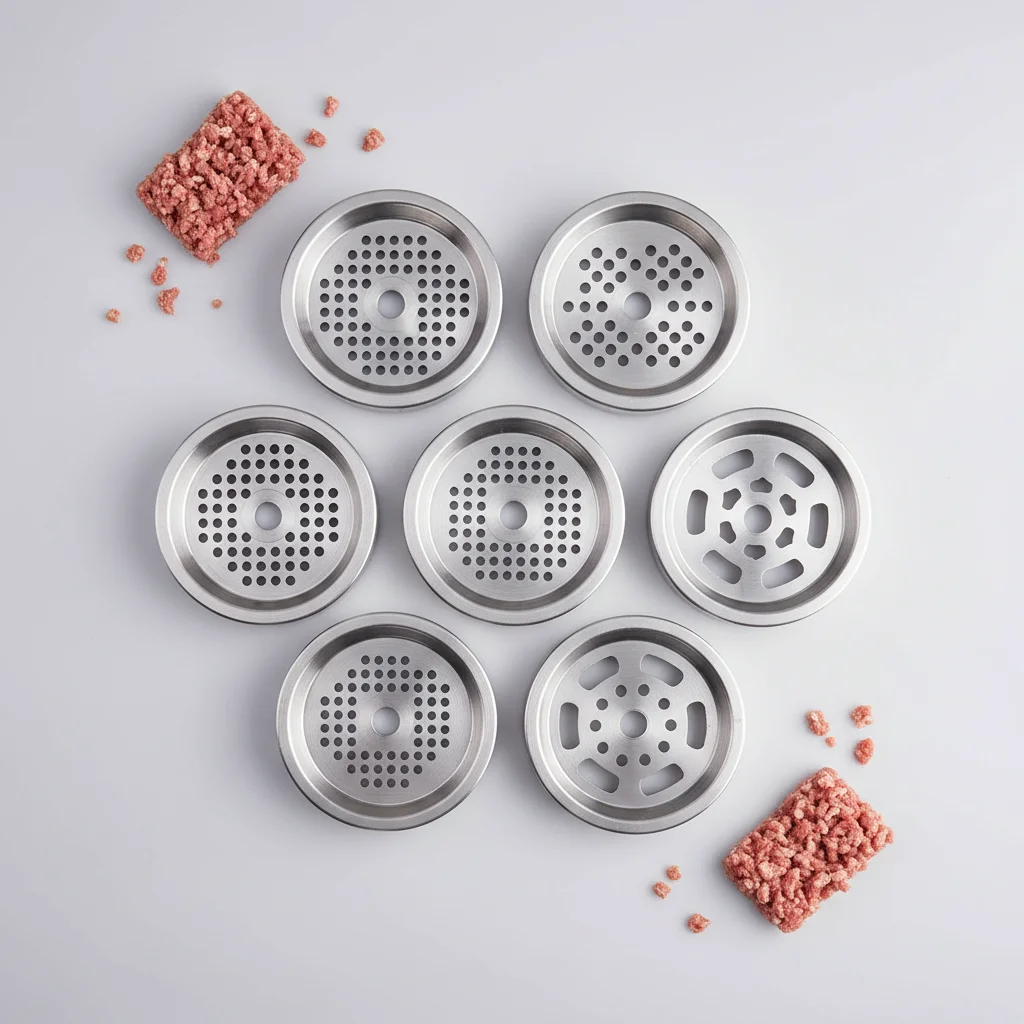
Meat grinder die plates are crucial components that directly influence the final texture of your ground meat. These perforated discs, often made from hardened steel, come in a variety of hole sizes and patterns, each designed to achieve a specific grind. Understanding how different die plates work is key to producing the perfect texture for sausages, burgers, or pet food.
Understanding Die Plate Hole Sizes
The most significant factor in a die plate is the size of its holes. Smaller holes, typically ranging from 3mm to 4.5mm (1/8 to 3/16 inch), produce a fine grind, ideal for pâtés, hot dogs, or very smooth sausages. Medium plates, with holes between 6mm and 8mm (1/4 to 5/16 inch), are versatile and commonly used for ground beef, meatballs, and most sausage types. Coarser plates, featuring holes from 10mm to 12mm (3/8 to 1/2 inch) or larger, are excellent for chili meat, some types of coarse sausages, or preparing meat for pet food where a chunkier texture is desired.
The Impact of Hole Patterns and Number
Beyond just the diameter, the pattern and number of holes on a die plate also play a role. Some plates have a uniform distribution, while others might feature a central hole or a spiral pattern. While less impactful than hole size, these variations can subtly affect the flow of meat and the consistency of the grind. A greater number of holes, especially on larger plates, can sometimes lead to faster processing, but the primary determinant of texture remains the individual hole size.
- Fine Grind (3-4.5mm): Ideal for smooth textures like pâté or hot dogs.
- Medium Grind (6-8mm): Versatile for burgers, meatballs, and most sausages.
- Coarse Grind (10-12mm+): Best for chili, chunky pet food, or specific sausage types.
- Kidney Plates: Feature large, kidney-shaped holes for very coarse, shredded textures.
- Burger Plates: Often have a specific pattern to create a desirable burger texture.
Choosing the Right Die Plate for Your Needs
|
Our Picks for the Best Meat Grinder in 2026
As an Amazon Associate I earn from qualifying purchases.
|
||
| Num | Product | Action |
|---|---|---|
| 1 | CHEFFANO Meat Grinder, 2600W Max Stainless Steel Meat Grinder Electric, ETL Approved Heavy Duty Meat Mincer Machine with 2 Blades, 3 Plates, Sausage Stuffer Tube & Kubbe Kit for Home Kitchen Use |

|
| 2 | AAOBOSI Meat Grinder Electric 3000W Max with Touch Color Screen, Auto-Reverse & Built-in Storage - 3 Speed Settings,Grinding, Sausage & Kibbe Making for Home Use, Stainless Steel |
|
| 3 | AAOBOSI Multifunctional Digital Meat Grinder Electric 3000W Max w/ 9 Touch Screen Presets, Auto-Reverse & Built-in Storage -Grinding, Sausage & Kibbe & Grate Cheese Making for Home Use |
|
| 4 | Camic Electric Meat Grinder - 300W Sausage Stuffer for Home Kitchen Use Meat Mincer with Stainless Steel 3 Plates, 1 Blade, Sausage Tube, Kubbe Maker |
|
| 5 | Cuisinart Electric Meat Grinder, Stainless Steel |
|
| 6 | Weston Electric Meat Grinder & Sausage Stuffer, #12 750 Watt, 1 HP Motor, Grinds 4 lbs Per Minute, Includes Stainless Steel Grinding Plates, Die-Cast Aluminum (33-1301-W) |
|
| 7 | Electric Meat Grinder, Sausage Stuffer with 3 Sausage Tubes, 2 Blades, 3 Plates, 3200W Max, Meat Grinder Heavy Duty for Home Kitchen Use, Stainless Steel (Black) |
|
| 8 | Meat Grinder, Electric Meat Grinder with Sausage Stuffer Maker & Kubbe Kit, Metal-Body Meat Mincer with 3 Stainless Steel Grinding Plates & 2 Blades for Home Kitchen Using |
|
| 9 | AAOBOSI #12 Meat Grinder, [3000W] 3 Speed Meat Grinder Heavy Duty: Built-in Storage Box, 2 Blades,4 Plates,3 Sausage Stuffers,Kibbe Kit,Meat Claw & Burger Press, for Home & Kitchen Use |
|
| 10 | VEVOR Commercial Electric Meat Grinder, 5 lbs/min Capacity, #8 Industrial Meat Mincer with 2 Stainless Steel Blades, 2 Grinding Plates, 600W Heavy-Duty Sausage Maker Stuffer, for Kitchen, Restaurant |
|
Selecting the correct die plate depends entirely on your culinary goal. For example, if you’re making breakfast sausage, a medium grind plate will likely be your go-to. For a delicate terrine, a fine grind is essential. Many home meat grinders come with a selection of plates, but specialized plates can be purchased separately to expand your grinding capabilities. Always ensure the die plate is compatible with your specific grinder model.
Consider the type of meat and the desired fat distribution. A finer grind will emulsify fat more thoroughly, while a coarser grind will leave more distinct pieces of fat, which can be desirable for certain applications like Italian sausage.Investing in a good set of die plates can significantly enhance your meat grinding experience and the quality of your final product.
Maintenance and Longevity of Die Plates
Proper care of your meat grinder die plates is crucial for their longevity and performance. Always clean them immediately after use to prevent meat residue from drying and hardening. Hand washing with warm, soapy water is generally recommended, followed by thorough drying to prevent rust, especially for carbon steel plates. Some stainless steel plates may be dishwasher safe, but always check your manufacturer’s instructions. Storing them in a dry environment, perhaps lightly oiled with food-grade mineral oil, will help prevent corrosion and keep them in top condition for years of use.
