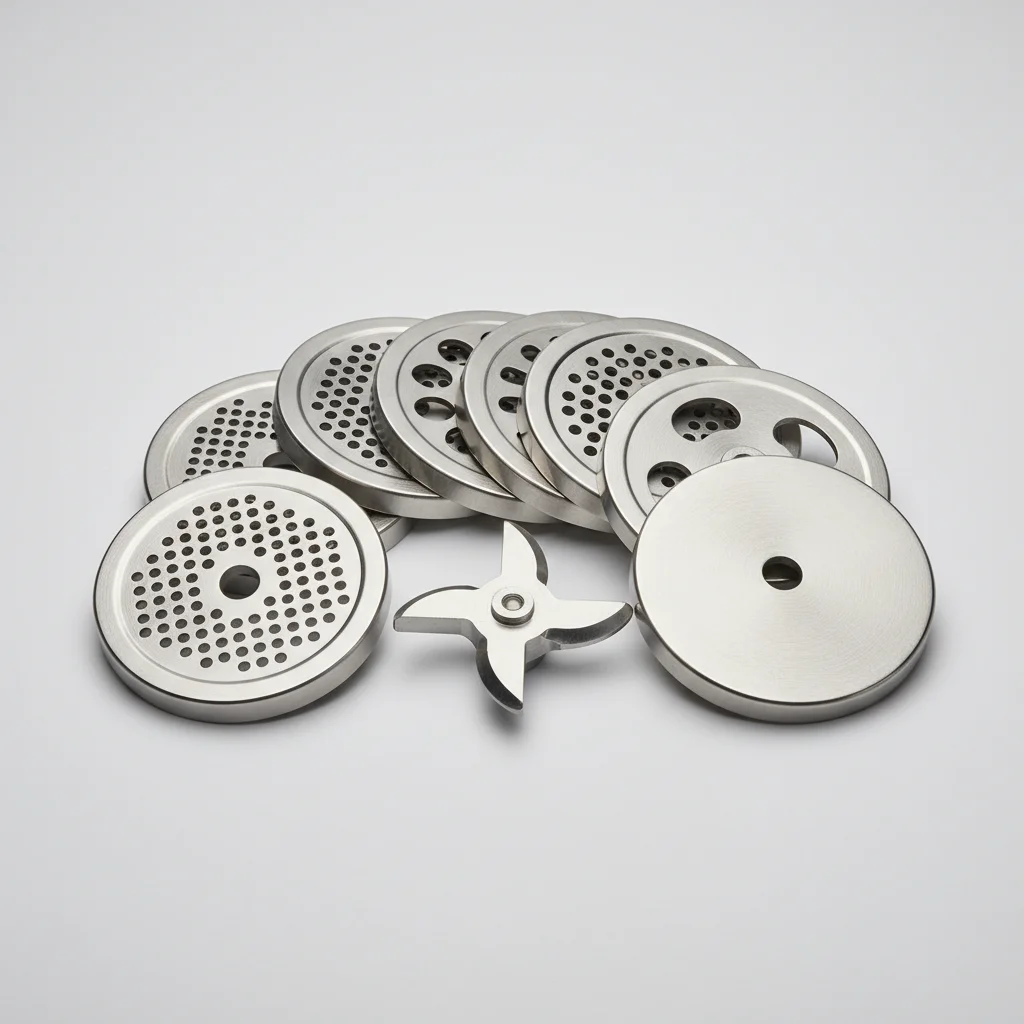
When selecting meat grinder plates, the ideal number of holes depends entirely on the type of grind you aim to achieve, ranging from a coarse 10mm plate for chili to a fine 3mm plate for emulsified sausages. Most home users will find a set of three plates—coarse, medium, and fine—sufficient for a wide variety of tasks, while specialized applications might require more specific hole sizes. The diameter of the holes directly impacts the texture of your ground meat, influencing everything from the mouthfeel of burgers to the consistency of pet food.
Understanding Meat Grinder Plate Sizes
Meat grinder plates come in a range of sizes, typically measured by the diameter of their holes. Common sizes include 3mm (1/8 inch) for very fine grinds, 4.5mm (3/16 inch) for medium grinds, 6mm (1/4 inch) for coarse grinds, and even larger sizes up to 12mm (1/2 inch) for extra coarse applications. The choice of plate size is crucial for achieving the desired texture in your final product. For instance, a fine grind is essential for smooth pâtés or hot dogs, while a coarse grind is perfect for chili meat or breakfast sausage.
Matching Plate Size to Your Grinding Needs
- Fine Grind (3-4.5mm): Ideal for making hot dogs, bologna, baby food, or very smooth pâtés. This size ensures a uniform, almost paste-like consistency.
- Medium Grind (4.5-6mm): The most versatile option, suitable for burgers, meatloaf, and most types of sausage. It provides a good balance of texture and binding.
- Coarse Grind (6-12mm): Best for chili meat, stew meat, or when you want a more rustic texture in your sausages. Also excellent for grinding bones for raw pet food.
- Kidney Plate: Features large, kidney-shaped holes, primarily used for the first pass on very tough or sinewy meats, or for breaking down larger chunks before a finer grind.
The Impact of Plate Material and Maintenance
|
Our Picks for the Best Meat Grinder in 2026
As an Amazon Associate I earn from qualifying purchases.
|
||
| Num | Product | Action |
|---|---|---|
| 1 | VEVOR Commercial Electric Meat Grinder, 5 lbs/min Capacity, #8 Industrial Meat Mincer with 2 Stainless Steel Blades, 2 Grinding Plates, 600W Heavy-Duty Sausage Maker Stuffer, for Kitchen, Restaurant |

|
| 2 | CHEFFANO Meat Grinder, 2600W Max Stainless Steel Meat Grinder Electric, ETL Approved Heavy Duty Meat Mincer Machine with 2 Blades, 3 Plates, Sausage Stuffer Tube & Kubbe Kit for Home Kitchen Use |
|
| 3 | AAOBOSI Meat Grinder Electric 3000W Max with Touch Color Screen, Auto-Reverse & Built-in Storage - 3 Speed Settings,Grinding, Sausage & Kibbe Making for Home Use, Stainless Steel |
|
| 4 | Electric Meat Grinder, Sausage Stuffer with 3 Sausage Tubes, 2 Blades, 3 Plates, 3200W Max, Meat Grinder Heavy Duty for Home Kitchen Use, Stainless Steel (Black) |
|
| 5 | AAOBOSI Multifunctional Digital Meat Grinder Electric 3000W Max w/ 9 Touch Screen Presets, Auto-Reverse & Built-in Storage -Grinding, Sausage & Kibbe & Grate Cheese Making for Home Use |
|
| 6 | Meat Grinder, Electric Meat Grinder with Sausage Stuffer Maker & Kubbe Kit, Metal-Body Meat Mincer with 3 Stainless Steel Grinding Plates & 2 Blades for Home Kitchen Using |
|
| 7 | Cuisinart Electric Meat Grinder, Stainless Steel |
|
| 8 | AAOBOSI #12 Meat Grinder, [3000W] 3 Speed Meat Grinder Heavy Duty: Built-in Storage Box, 2 Blades,4 Plates,3 Sausage Stuffers,Kibbe Kit,Meat Claw & Burger Press, for Home & Kitchen Use |
|
| 9 | Weston Electric Meat Grinder & Sausage Stuffer, #12 750 Watt, 1 HP Motor, Grinds 4 lbs Per Minute, Includes Stainless Steel Grinding Plates, Die-Cast Aluminum (33-1301-W) |
|
| 10 | Camic Electric Meat Grinder - 300W Sausage Stuffer for Home Kitchen Use Meat Mincer with Stainless Steel 3 Plates, 1 Blade, Sausage Tube, Kubbe Maker |
|
Meat grinder plates are typically made from stainless steel or carbon steel. Stainless steel plates offer superior rust resistance and durability, making them a popular choice for longevity. Carbon steel plates, while often sharper initially, require more diligent care to prevent rust. Regardless of material, proper cleaning and lubrication are vital. After each use, plates should be thoroughly washed, dried, and lightly oiled with food-grade mineral oil to prevent corrosion and maintain their sharpness. Dull plates can smear meat rather than cut it cleanly, affecting both texture and safety.
When to Consider Specialized Plates
While a standard set of three plates covers most home grinding needs, specialized plates can enhance specific tasks. For example, a stuffing plate, which has a single large hole, is designed to facilitate the stuffing of sausages without further grinding. Similarly, a specialized bone grinding plate with extra-large, robust holes is available for those who regularly prepare raw pet food. Investing in these specialized plates can significantly improve efficiency and the quality of your finished products for particular applications.
The Role of the Knife Blade in Conjunction with Plates
The performance of your meat grinder plates is inextricably linked to the sharpness and condition of the knife blade. The blade works in tandem with the plate, pushing meat through the holes and cutting it cleanly. A dull blade will not cut effectively, leading to smeared meat, clogging, and an inconsistent grind. Always ensure your knife blade is sharp and properly aligned with the plate for optimal results. Regularly inspecting and sharpening or replacing your blade is as important as choosing the right plate size.
