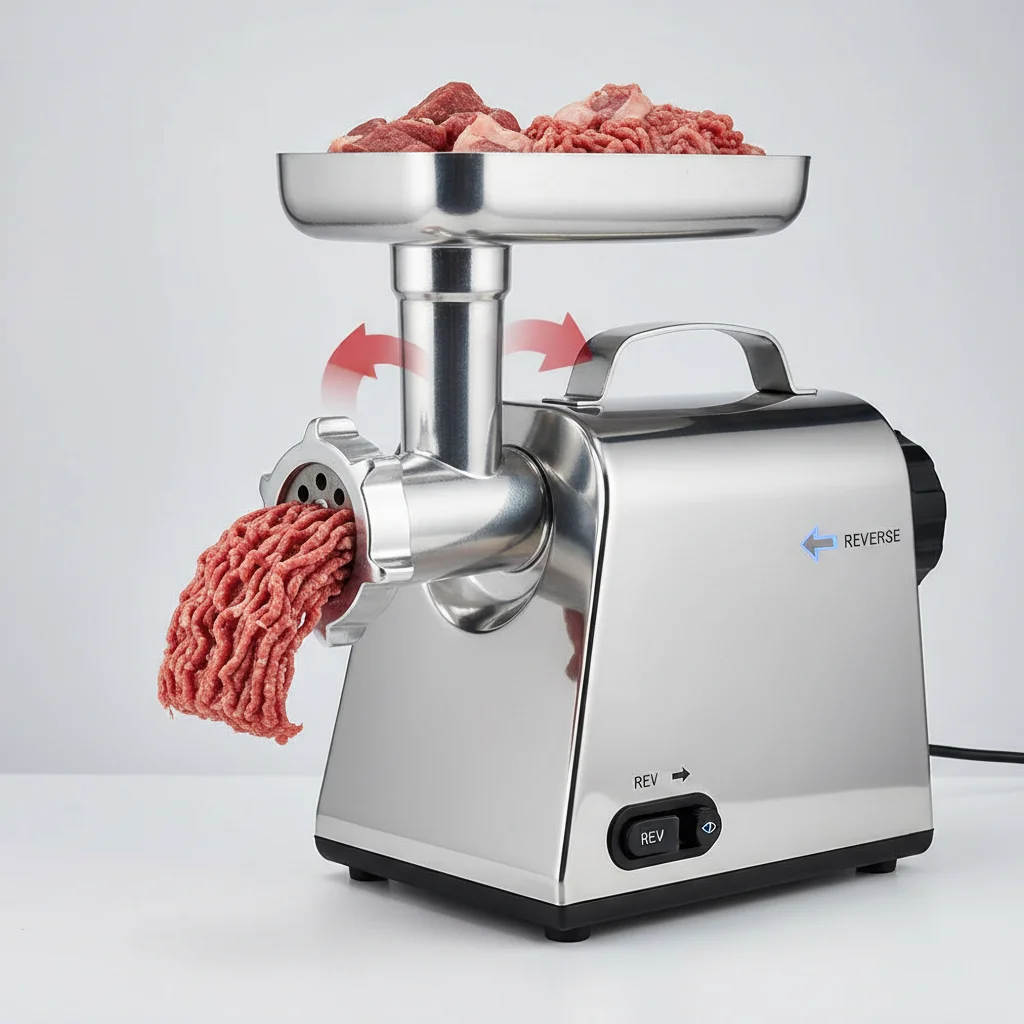
The meat grinder reverse function is a crucial feature that allows the auger to spin in the opposite direction, effectively clearing clogs and preventing damage to the motor. You should use the reverse function primarily when the grinder jams due to tough sinew, bone fragments, or an overloaded feed tube. This simple action can save you significant time and effort in disassembling and cleaning your unit.
Understanding the Reverse Function Mechanism
Most modern electric meat grinders come equipped with a reverse button. When activated, the motor momentarily changes its rotation, causing the auger to push the meat back towards the feed tube opening. This action helps to dislodge any material that is causing a blockage. It’s a safety and convenience feature designed to protect the motor from overheating and to make the grinding process smoother. Without it, a stubborn clog could lead to motor strain or even burnout, requiring costly repairs or replacement.
When to Engage the Reverse Function
The primary indicator for using the reverse function is a noticeable slowdown or complete stop of the auger, accompanied by increased motor strain or unusual noises. If you’re grinding particularly tough cuts of meat, like beef chuck with a lot of connective tissue, or processing game meat that might contain small bone fragments, clogs are more likely. Always try the reverse function before attempting to disassemble the grinder. It’s also useful if you accidentally feed too much meat into the hopper at once, overwhelming the auger’s capacity.
- Noticeable slowdown or complete stop of the auger.
- Increased motor strain or humming sound.
- Difficulty pushing meat through the grinder.
- Processing tough cuts with sinew or small bones.
- Accidental overloading of the feed tube.
How to Properly Use the Reverse Function
|
Our Picks for the Best Meat Grinder in 2026
As an Amazon Associate I earn from qualifying purchases.
|
||
| Num | Product | Action |
|---|---|---|
| 1 | Camic Electric Meat Grinder - 300W Sausage Stuffer for Home Kitchen Use Meat Mincer with Stainless Steel 3 Plates, 1 Blade, Sausage Tube, Kubbe Maker |

|
| 2 | AAOBOSI Multifunctional Digital Meat Grinder Electric 3000W Max w/ 9 Touch Screen Presets, Auto-Reverse & Built-in Storage -Grinding, Sausage & Kibbe & Grate Cheese Making for Home Use |
|
| 3 | Meat Grinder, Electric Meat Grinder with Sausage Stuffer Maker & Kubbe Kit, Metal-Body Meat Mincer with 3 Stainless Steel Grinding Plates & 2 Blades for Home Kitchen Using |
|
| 4 | AAOBOSI Meat Grinder Electric 3000W Max with Touch Color Screen, Auto-Reverse & Built-in Storage - 3 Speed Settings,Grinding, Sausage & Kibbe Making for Home Use, Stainless Steel |
|
| 5 | Electric Meat Grinder, Sausage Stuffer with 3 Sausage Tubes, 2 Blades, 3 Plates, 3200W Max, Meat Grinder Heavy Duty for Home Kitchen Use, Stainless Steel (Black) |
|
| 6 | CHEFFANO Meat Grinder, 2600W Max Stainless Steel Meat Grinder Electric, ETL Approved Heavy Duty Meat Mincer Machine with 2 Blades, 3 Plates, Sausage Stuffer Tube & Kubbe Kit for Home Kitchen Use |
|
| 7 | Cuisinart Electric Meat Grinder, Stainless Steel |
|
| 8 | AAOBOSI #12 Meat Grinder, [3000W] 3 Speed Meat Grinder Heavy Duty: Built-in Storage Box, 2 Blades,4 Plates,3 Sausage Stuffers,Kibbe Kit,Meat Claw & Burger Press, for Home & Kitchen Use |
|
| 9 | Weston Electric Meat Grinder & Sausage Stuffer, #12 750 Watt, 1 HP Motor, Grinds 4 lbs Per Minute, Includes Stainless Steel Grinding Plates, Die-Cast Aluminum (33-1301-W) |
|
| 10 | VEVOR Commercial Electric Meat Grinder, 5 lbs/min Capacity, #8 Industrial Meat Mincer with 2 Stainless Steel Blades, 2 Grinding Plates, 600W Heavy-Duty Sausage Maker Stuffer, for Kitchen, Restaurant |
|
Using the reverse function is straightforward. First, turn off the grinder’s main power switch. Then, press and hold the reverse button for a few seconds, typically 5-10 seconds, to allow the auger to clear the blockage. You might see some meat pushed back out of the feed tube. After releasing the reverse button, turn the grinder off again, wait a moment, and then restart it in the forward grinding direction. If the clog persists, repeat the process. If after two or three attempts the grinder still jams, it’s time to disassemble and manually clean the components.
Benefits of a Meat Grinder with Reverse Capability
A meat grinder with a reverse function offers several significant advantages. It extends the lifespan of your appliance by reducing motor strain and preventing overheating. It also enhances user convenience, as you can quickly resolve minor clogs without needing to take the entire unit apart. This feature is particularly valuable for home users who might not be processing large volumes but still encounter occasional tough pieces of meat. For those who frequently grind their own meat, the reverse function is almost a necessity for efficient and trouble-free operation.
Maintaining Your Grinder for Optimal Performance
While the reverse function is a great tool, proper maintenance can minimize its need. Always cut meat into smaller, manageable pieces before feeding them into the grinder. Remove as much sinew, gristle, and bone as possible. Ensure your blades are sharp and your grinding plates are clean. After each use, thoroughly clean all components to prevent food residue buildup, which can contribute to future clogs. Regular cleaning and proper preparation of your meat will ensure your grinder operates smoothly and efficiently, making the reverse function a helpful backup rather than a frequent necessity.
