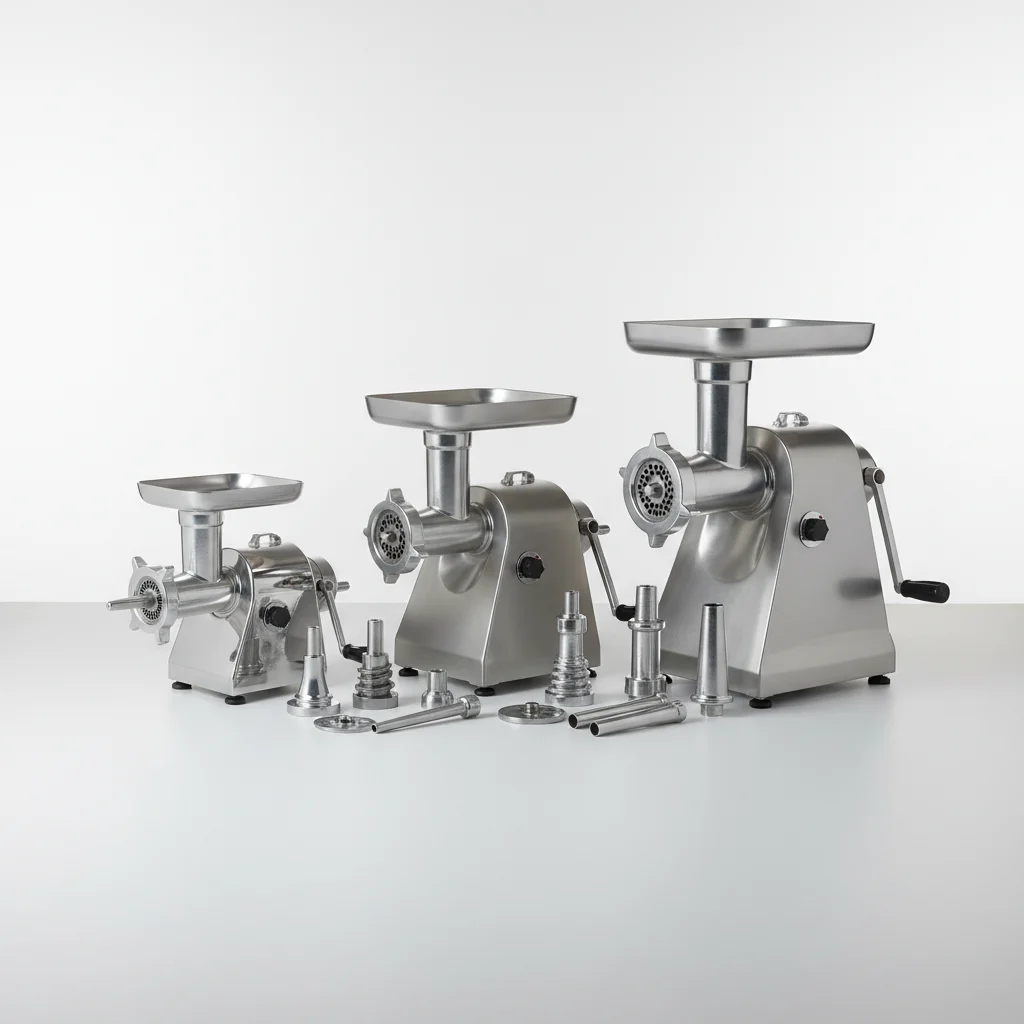
Choosing the right meat grinder size is crucial for efficiency and performance, and it primarily depends on the volume of meat you plan to process. For most home users, a #8 or #12 grinder is ideal, offering a good balance between capacity and counter space. Larger operations, or those frequently processing large game, might benefit from a #22 or #32 unit.
Understanding Meat Grinder Numbers
Meat grinder sizes are typically designated by a number, such as #5, #8, #12, #22, or #32. This number refers to the diameter of the grinding plate and the opening of the feed tube. A higher number indicates a larger grinder, capable of processing more meat faster and often accommodating larger cuts without extensive pre-cutting. This directly impacts the speed and ease of your grinding tasks.
For example, a #8 grinder usually has a plate diameter of around 2.5 inches, while a #22 grinder can have a plate diameter closer to 3.5 inches. This seemingly small difference translates to a significant increase in throughput and the size of meat pieces that can be fed into the machine.
Small-Scale Home Use: #5 to #8 Grinders
If you’re an occasional home grinder, perhaps making sausage once a month or grinding small batches of ground beef, a #5 or #8 meat grinder is likely sufficient. These compact units are easy to store, clean, and are perfect for processing a few pounds of meat at a time. They are also generally more affordable, making them a great entry point for beginners.
- #5 Grinder: Best for very small batches, occasional use, and limited storage space.
- #8 Grinder: A versatile choice for most home cooks, handling 5-10 lbs of meat efficiently.
- Compact Design: Ideal for kitchens with limited counter or storage space.
- Affordability: Generally the most budget-friendly options available.
- Ease of Cleaning: Smaller parts are often quicker and simpler to wash by hand.
Mid-Range Home & Hobby Use: #12 to #22 Grinders
|
Our Picks for the Best Meat Grinder in 2026
As an Amazon Associate I earn from qualifying purchases.
|
||
| Num | Product | Action |
|---|---|---|
| 1 | Weston Electric Meat Grinder & Sausage Stuffer, #12 750 Watt, 1 HP Motor, Grinds 4 lbs Per Minute, Includes Stainless Steel Grinding Plates, Die-Cast Aluminum (33-1301-W) |

|
| 2 | AAOBOSI #12 Meat Grinder, [3000W] 3 Speed Meat Grinder Heavy Duty: Built-in Storage Box, 2 Blades,4 Plates,3 Sausage Stuffers,Kibbe Kit,Meat Claw & Burger Press, for Home & Kitchen Use |
|
| 3 | Meat Grinder, Electric Meat Grinder with Sausage Stuffer Maker & Kubbe Kit, Metal-Body Meat Mincer with 3 Stainless Steel Grinding Plates & 2 Blades for Home Kitchen Using |
|
| 4 | AAOBOSI Multifunctional Digital Meat Grinder Electric 3000W Max w/ 9 Touch Screen Presets, Auto-Reverse & Built-in Storage -Grinding, Sausage & Kibbe & Grate Cheese Making for Home Use |
|
| 5 | CHEFFANO Meat Grinder, 2600W Max Stainless Steel Meat Grinder Electric, ETL Approved Heavy Duty Meat Mincer Machine with 2 Blades, 3 Plates, Sausage Stuffer Tube & Kubbe Kit for Home Kitchen Use |
|
| 6 | AAOBOSI Meat Grinder Electric 3000W Max with Touch Color Screen, Auto-Reverse & Built-in Storage - 3 Speed Settings,Grinding, Sausage & Kibbe Making for Home Use, Stainless Steel |
|
| 7 | Cuisinart Electric Meat Grinder, Stainless Steel |
|
| 8 | Electric Meat Grinder, Sausage Stuffer with 3 Sausage Tubes, 2 Blades, 3 Plates, 3200W Max, Meat Grinder Heavy Duty for Home Kitchen Use, Stainless Steel (Black) |
|
| 9 | VEVOR Commercial Electric Meat Grinder, 5 lbs/min Capacity, #8 Industrial Meat Mincer with 2 Stainless Steel Blades, 2 Grinding Plates, 600W Heavy-Duty Sausage Maker Stuffer, for Kitchen, Restaurant |
|
| 10 | Camic Electric Meat Grinder - 300W Sausage Stuffer for Home Kitchen Use Meat Mincer with Stainless Steel 3 Plates, 1 Blade, Sausage Tube, Kubbe Maker |
|
For avid hunters, homesteaders, or those who frequently process larger quantities of meat (e.g., a quarter deer, a whole hog, or regular large batches of sausage), a #12 or #22 meat grinder offers a significant upgrade in capacity and speed. These grinders can handle tougher cuts and larger volumes without overheating or bogging down, making the grinding process much more efficient and less labor-intensive.
A #12 grinder is often considered the sweet spot for serious home users, providing ample power and throughput without being overly bulky. The #22 steps up the game further, suitable for processing entire deer or multiple large cuts in a single session, significantly reducing processing time.
Commercial & Heavy-Duty Home Use: #22 to #32 Grinders
When you’re dealing with very large volumes of meat, such as processing multiple deer during hunting season, running a small butcher shop, or preparing large quantities of raw pet food, a #22 or #32 meat grinder becomes essential. These heavy-duty machines are built for continuous operation and can handle tough sinew and bone with ease, minimizing the need for extensive pre-cutting.
The robust construction and powerful motors of these larger grinders ensure longevity and consistent performance under demanding conditions. While they require more space and are a greater investment, their efficiency and durability make them invaluable for high-volume processing.
Factors Beyond Size: Motor Power and Material
While grinder size dictates the feed opening and plate diameter, the motor’s horsepower (HP) is equally important for performance. A larger grinder with an underpowered motor will struggle, regardless of its size. Look for a motor that matches the grinder’s capacity – typically, higher numbers require more HP. Additionally, the material of the grinder (stainless steel is preferred for durability and hygiene) and the quality of the gears and auger also play a significant role in the overall longevity and efficiency of the machine.
