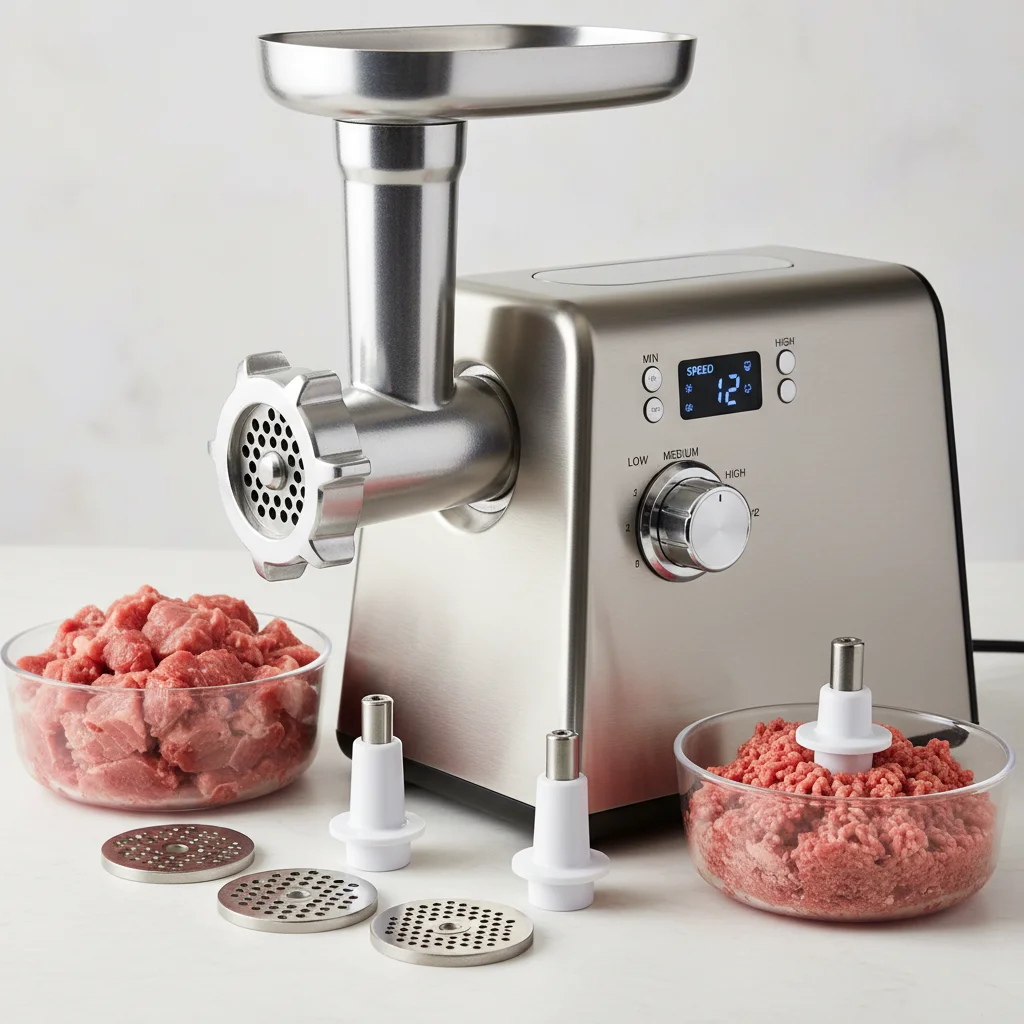
When considering meat grinder speeds, most home users will find that two to three settings are perfectly adequate for a wide range of grinding tasks. While some commercial models boast more, a simple high and low speed, often supplemented by a reverse function, provides sufficient control for processing various meats and textures without overcomplicating operation.
Understanding Variable Speed Control in Meat Grinders
Variable speed control in a meat grinder allows you to adjust the rotation rate of the auger, which directly impacts the consistency and temperature of your ground meat. A slower speed is ideal for tougher cuts or when you want a coarser grind, as it reduces friction and heat buildup, preserving the meat’s texture and preventing smearing. Conversely, a higher speed can be efficient for softer meats or when a finer grind is desired, though care must be taken to avoid excessive heat. For see our meat grinder recommendations on this site.
Many entry-level grinders offer a single speed, which can be limiting. Mid-range models typically include at least two speeds (e.g., fast and slow), while premium home and light commercial units might feature a continuously variable dial or several distinct speed presets. The reverse function, often found alongside speed settings, is crucial for clearing clogs without disassembling the unit.
Optimal Speed Settings for Different Meats
The ideal meat grinder speed largely depends on the type of meat you’re processing and the desired outcome. For delicate meats like chicken or fish, a slower speed is generally recommended to maintain texture and prevent mushiness. When grinding tougher cuts of beef or pork for sausages, a medium speed can be effective, balancing efficiency with quality. For very coarse grinds, such as those used in some chili recipes or for pet food, a slow speed is paramount to ensure distinct pieces rather than a paste.
- Slow Speed: Best for delicate meats (chicken, fish), coarse grinds, and preventing heat buildup.
- Medium Speed: Suitable for general-purpose grinding of beef, pork, and venison for burgers or meatballs.
- High Speed: Efficient for finer grinds of softer meats, but monitor for heat generation.
- Reverse Function: Essential for clearing blockages and preventing motor strain.
The Impact of Speed on Meat Quality and Safety
|
Our Picks for the Best Meat Grinder in 2026
As an Amazon Associate I earn from qualifying purchases.
|
||
| Num | Product | Action |
|---|---|---|
| 1 | Meat Grinder, Electric Meat Grinder with Sausage Stuffer Maker & Kubbe Kit, Metal-Body Meat Mincer with 3 Stainless Steel Grinding Plates & 2 Blades for Home Kitchen Using |

|
| 2 | Electric Meat Grinder, Sausage Stuffer with 3 Sausage Tubes, 2 Blades, 3 Plates, 3200W Max, Meat Grinder Heavy Duty for Home Kitchen Use, Stainless Steel (Black) |
|
| 3 | AAOBOSI #12 Meat Grinder, [3000W] 3 Speed Meat Grinder Heavy Duty: Built-in Storage Box, 2 Blades,4 Plates,3 Sausage Stuffers,Kibbe Kit,Meat Claw & Burger Press, for Home & Kitchen Use |
|
| 4 | Camic Electric Meat Grinder - 300W Sausage Stuffer for Home Kitchen Use Meat Mincer with Stainless Steel 3 Plates, 1 Blade, Sausage Tube, Kubbe Maker |
|
| 5 | CHEFFANO Meat Grinder, 2600W Max Stainless Steel Meat Grinder Electric, ETL Approved Heavy Duty Meat Mincer Machine with 2 Blades, 3 Plates, Sausage Stuffer Tube & Kubbe Kit for Home Kitchen Use |
|
| 6 | Weston Electric Meat Grinder & Sausage Stuffer, #12 750 Watt, 1 HP Motor, Grinds 4 lbs Per Minute, Includes Stainless Steel Grinding Plates, Die-Cast Aluminum (33-1301-W) |
|
| 7 | AAOBOSI Multifunctional Digital Meat Grinder Electric 3000W Max w/ 9 Touch Screen Presets, Auto-Reverse & Built-in Storage -Grinding, Sausage & Kibbe & Grate Cheese Making for Home Use |
|
| 8 | Cuisinart Electric Meat Grinder, Stainless Steel |
|
| 9 | VEVOR Commercial Electric Meat Grinder, 5 lbs/min Capacity, #8 Industrial Meat Mincer with 2 Stainless Steel Blades, 2 Grinding Plates, 600W Heavy-Duty Sausage Maker Stuffer, for Kitchen, Restaurant |
|
| 10 | AAOBOSI Meat Grinder Electric 3000W Max with Touch Color Screen, Auto-Reverse & Built-in Storage - 3 Speed Settings,Grinding, Sausage & Kibbe Making for Home Use, Stainless Steel |
|
The speed at which you grind meat has a direct impact on both the quality and safety of the final product. Grinding too fast can generate excessive heat, which can melt fat, alter the meat’s texture, and potentially promote bacterial growth if the meat’s temperature rises above safe limits. This is particularly important when making sausages, where maintaining a cold temperature is key to proper emulsification and preventing spoilage.
Conversely, grinding too slowly might prolong the process, but it significantly reduces heat generation, preserving the meat’s natural juices and preventing smearing. This results in a more appealing texture and flavor. Always ensure your meat is well-chilled, ideally partially frozen, before grinding, regardless of the speed setting, to achieve the best results and minimize bacterial risk.
When More Speeds Are Beneficial (and When They Aren’t)
While a basic two-speed grinder suffices for most home cooks, more speed options can be beneficial for those who frequently process a wide variety of meats or demand very specific textures. For instance, a butcher or a serious hunter might appreciate the nuanced control offered by a grinder with multiple presets or a continuously variable dial. This allows for fine-tuning the grind for everything from pâtés to chunky chili meat.
However, for the average home user, an excessive number of speed settings can be an unnecessary complication. Often, the difference between closely spaced speeds is negligible in practical terms. Focus instead on grinders that offer a clear distinction between slow and fast, along with a reliable reverse function. Prioritize motor power and build quality over a multitude of speed options you may never use.
